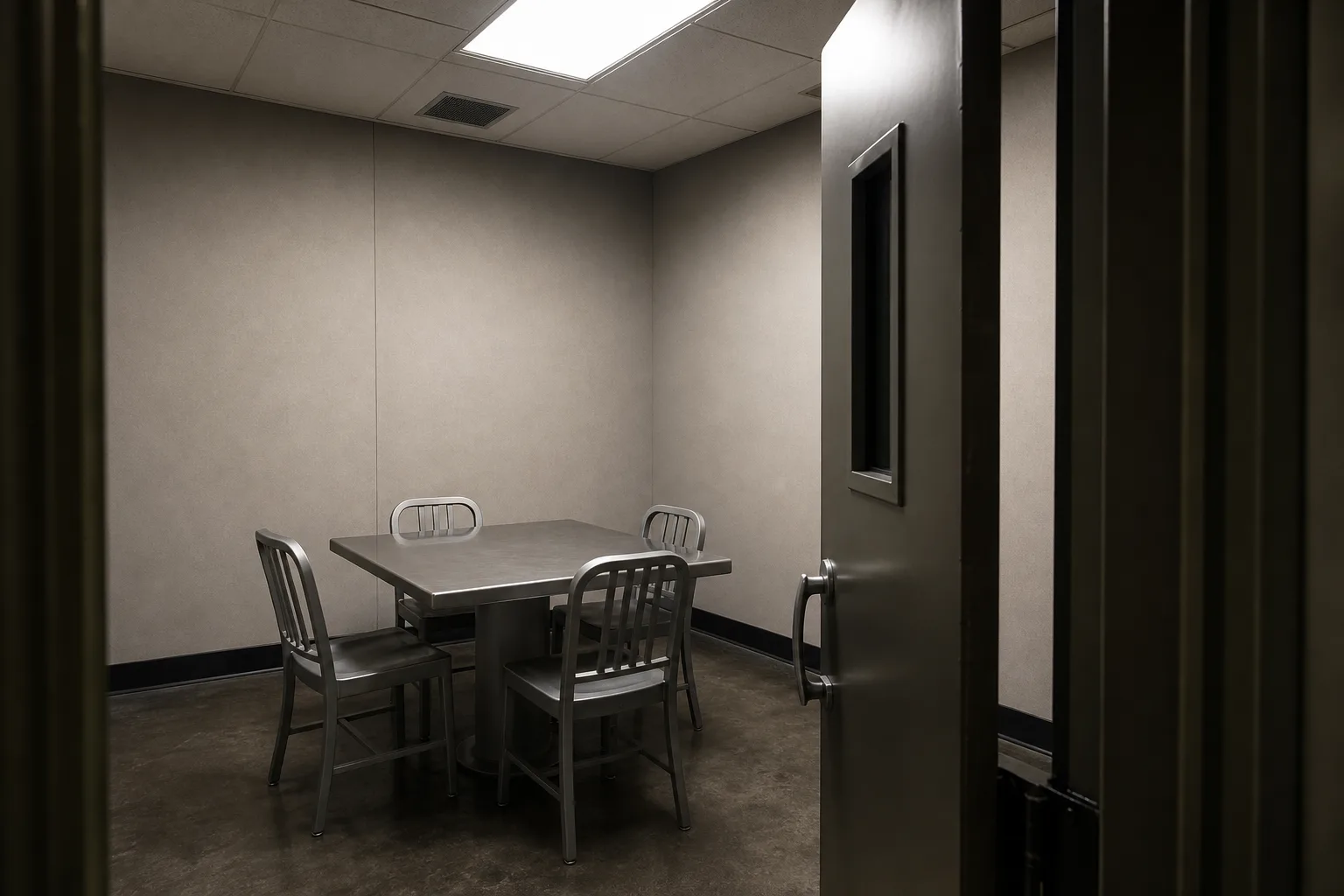
A written record of how defense representation in sexual offense cases is arranged, priced and evaluated, put together by one person who had to work it out. Nothing here is legal advice and nothing is for sale.
The call usually comes on an ordinary afternoon, from a number with a local area code, and it is polite. A detective wants to clear something up, get your side, close the file. Nothing is filed. No one has been arrested. Most people treat that as the reassuring part, and it is the opposite: the absence of a charge means the decision is still open, and everything said in the next hour becomes an input into it. What happens in that window is the least reversible part of a sexual offense case, and it happens before most defendants have spoken to anyone about money.
What the pre-charge window actually is
Between an allegation and a filed charge sits an investigation, and it is shorter than people assume. A report is taken, a detective is assigned, a recorded interview with the complainant is conducted, and then the investigator begins looking for corroboration: text threads, ride-share records, medical exam findings where one exists, and, most valuable of all, an account from the person accused. Depending on the jurisdiction and the caseload, that whole sequence can run a few weeks or a few months. A prosecutor then reviews the packet and decides whether to file, and once filed, the case has a docket number, a bond posture, and momentum.
The important structural fact is that the investigating agency controls the packet until it goes to the prosecutor. Anything added to it before that handoff shapes the charging decision itself, not merely the trial two years later. Anything a defense lawyer wants to add after the filing has to travel upstream against a decision already made, past a prosecutor who has told a supervisor, and possibly a complainant, what the office intends to do. The same document is worth less later. That is not a comment on anyone's good faith; it is how institutional decisions harden.
What a statement does and what it cannot undo
A recorded interview is permanent in a way almost nothing else in the case is. Witnesses forget, lab results get reinterpreted, phone extractions produce ambiguous timestamps. A recording of a suspect describing an evening does none of that. It also does something people rarely anticipate, which is to lock in a version. If the account later needs refinement, because a date was wrong or a detail was remembered incorrectly under stress, the refinement reads as a change, and a changed story is the single most effective cross-examination material a prosecutor can hold.
There is a second effect, quieter and more damaging. Most people going into that room want to be understood, so they concede context: that there was contact, that alcohol was involved, that the two of them had a history. Those concessions are often true and often innocent, and they also supply exactly the elements the state would otherwise have to prove independently. Consent cases in particular turn on a handful of admitted facts and one contested one. Handing over the admitted facts is not the same as helping. The right to decline the interview exists precisely because it cannot be unwound.
What retaining counsel early actually costs
The honest answer is that pre-charge representation is priced as a separate engagement, usually a flat fee for the investigative stage, with the understanding that a filed case triggers a new and larger retainer. Ask directly whether the pre-charge fee is credited against the trial retainer, because practices differ and the difference is real money. Ask what the fee buys in concrete terms: contacting the detective, declining or negotiating the terms of any interview, preserving evidence that degrades quickly such as surveillance video and phone data, and in some offices presenting a written submission to the prosecutor before the filing decision. A firm that handles these matters routinely, such as a Sexual Assault Lawyer who takes pre-charge engagements as a standing part of the practice, will quote that stage without hesitation because it is a defined piece of work.
Set that number against the alternative. Post-filing defense in a felony sexual offense case involves discovery review measured in thousands of pages, expert consultation, investigator time, motion practice, and, if it goes that far, trial preparation that consumes weeks. The pre-charge engagement is typically a fraction of that, and it is the only point at which the outcome under discussion is no case at all. Even where a charge is filed anyway, the money bought a clean record: no statement to litigate, evidence preserved, and a lawyer who has been on the file since before the first hearing.
Moving at the speed the case is moving
Practical urgency matters here more than in almost any other area of criminal defense. The Federal Bureau of Investigation, which is responsible for compiling national crime reporting from state and local agencies, sees these cases counted at the point of report, not the point of charge, and the gap between those two events is the whole subject. Use it. Return the detective's call only to say that counsel will be in touch, write down the date, the badge number and the agency, and preserve your own phone rather than deleting anything. Then spend a day on consultations rather than a week.
The uncomfortable part is that the highest-leverage decision in the case arrives before anyone feels ready to make it, at a moment when spending on a lawyer feels premature. It is not premature. It is the one point where the file is still being built rather than defended.